My Blog List

Showing posts with label movie review. Show all posts

Saturday, 26 October 2013

Blackfish (2013)


Must admit I started watching this thinking it would be one of those crap disaster-monster movies about a killer whale ravaging the inhabitants of some town off the east coast of America. I was wrong. What I saw instead was quite a one-sided though thoroughly absorbing 80 minute documentary about the horrors and moral pitfalls of the confinement of killer whales and the fatal results.

Orcinus Orca, to give killer whales their Latin moniker, are dangerous. Blackfish gives example after example of this. And yet they are not the targets of Gabriela Cowperthwaite's surprisingly fascinating documentary: it's the suits, specifically SeaWorld, with vested interests in the inhumane capture and psychologically debilitating captivity of a naturally wild mammalfish (not the technical term perhaps). All for lucrative financial gain of course.

SeaWorld, like all such companies, seem to be pretty disgusting and prone to misrepresenting inconvenient truths. There's no attempt to analyse the happenings from their point of view - and they refused to contribute any counter-argument to the picture, though they did offer a defensive statement retrospective of Blackfish's appearance at the Sundance festival earlier this year - but it remains difficult to sympathise with SeaWorld. They are in utter ambivalence to the mental health of the whales (there is a detailed segment featuring scientists and orca-experts explaining the significant emotional capabilities of the animals, rendering them intelligent enough to be psychologically damaged and altered by the torturous conditions they live in) or the trainers, who have largely been left in ignorance of the dangers they face when working with their charges. That the whale shows continue much as before - despite a court case - with only slight changes to trainer safety precautions is the most disturbing aspect of all; indeed, the infamous triple human-killer killer whale Tilikum is actually still giving performances, which is extraordinary.

Cowperthwaite interviews neglected employees as well as a remorseful old whale hunter, all of which are moving and emotional and tear inducing; she manipulates the audience in a superb way, encouraging even those who don't usually think much about abuses to animals (like me) to brandish an animal rights sign. It's a true documentary, expertly compiled and edited with music drenched in emotional significance to evoke in the audience the rage that clearly compelled Cowperthwaite to make Blackfish.

There's a quote towards the end: (paraphrasing) "in fifty years time we'll look back at these happenings and think them barbaric". There's a nice resonance in there that rings true somehow. One wonders how long this practice at SeaWorld will continue. With directors like Cowperthwaite shedding light on yet further examples of murky corporational workings, probably not very long - lobby and protest groups are massing and mobilising in opposition.

Saturday, 5 October 2013

Elysium


Ok, it's actually been a few weeks since I actually saw Elysium in the cinema and I have been lazy and not written about it until now. But here we are with Neill Blomkamp, Matt Damon and Sharlto Copley. We have an action packed science fiction that concurrently plays on the prescient themes of economic inequality and hero-saves-the-world daring-do. Those are, as I shall discuss, fundamentally contradictory and symbolic of the muddled message at the very heart of the script. There will be spoilers, but then how else can I discuss the meat of the film.

Roughly speaking Damon is a former convict looking to set his life in order working in a factory that builds androids. But he is then the victim of an accident, leaving him with only a few days to live. He must get to Elysium and cure himself with the magic machines they have up there on this distant satellite. Meanwhile Jodie Foster is desperate to preserve her beautiful privileged home from the dirty vermin smouldering on Earth. The wildcard Agent Kruger (Copley) is the baddy who tried to kill everyone.

It's a moderately pleasing picture with brilliantly realised VFX (as one would expect for a big budget) and photographically engrossing combat scenes. Matt Damon is Mr.Consistency once more as the ailing central character Max Da Costa desperately in need of medical salvation from a near-fatal nuclear exposure, who bumps his childhood sweetheart Frey Santiago (Alice Braga) and her sickly daughter; Copley is sufficiently creepy to play the villain Kruger and that irrepressible South African accent is superb the whole way through; and Foster is as sternly matriarchal and ruthless as she needed to be for her role as Delacourt, the Secretary of Defence charged with defending the privileged satellite world of Elysium. 

As for the politics - and one could hardly argue this is not a political film considering the flagrant subject matter of wealth disparity - things are less convincing. I'm not sure how deep and serious Blomkamp's socio-political convictions were for Elysium but the general message has been tragically garbled in favour of superficial plot twists. The concept of a literal partition (i.e. space) between rich and poor is potentially thought-provoking. It is an exaggerated and partisan view of a future society, completely eliminating the bourgeoisie (something Marx would have taken issue with), but nonetheless interesting. Exaggeration is absolutely fine if it is deliberately employed to make a greater, overarching observation about the imbalance of monetary distribution in the modern world. But it wasn't. It was just a cool way of making Da Costa have to fight the evil guys with cool futuristic weapons in a standard quest storyline.


To question Elysium further we would have to examine the motives behind each of the main characters and understand why it is they want to reach Elysium. Max Da Costa wants to heal himself on one of Elysium's wizard medical capsules; Frey Santiago wants to heal her daughter from leukaemia; Kruger wants to supplant the Elysium government and rule as an autonomous figure in luxury. In short, all central characters have no concept of a greater liberation of mankind from the suppression of the rich, but strive forwards with selfish goals in mind. That there is an eventual emancipation of the underprivileged is tacked on at the end as a way of justifying the selfish ambitions that had driven Da Costa and Santiago thus far. When we remember that the wealthy citizens of Elysium don't even turn out to be the bad guys the message becomes ever more confused. Delacourt and the other misguided few are rendered just as victimised as their social underlings by Kruger's callous opportunism. Blomkamp really missed a chance to make some seriously relevant social statements pertaining to the prevalent economic inequality of our world. Elysium's political message is frighteningly flippant - a once pure message has been strangled by the desire to make a good story. 

Should I forget political morality and just take the movie at face value? Possibly... but no. Cinema is the perfect platform for debates about the global problems of our modern society. It's strange that a deficiency in care and thought was allowed to pass considering the liberal centre left leanings of those who work in cinema and the arts (obviously, I'm talking about the creative types not the corporate suits). Alas, the fundamentals of Elysium will forever remain unresolved. Visually it's great though, and the world on Elysium is gorgeously idyllic.

Thursday, 26 September 2013

Europa Report


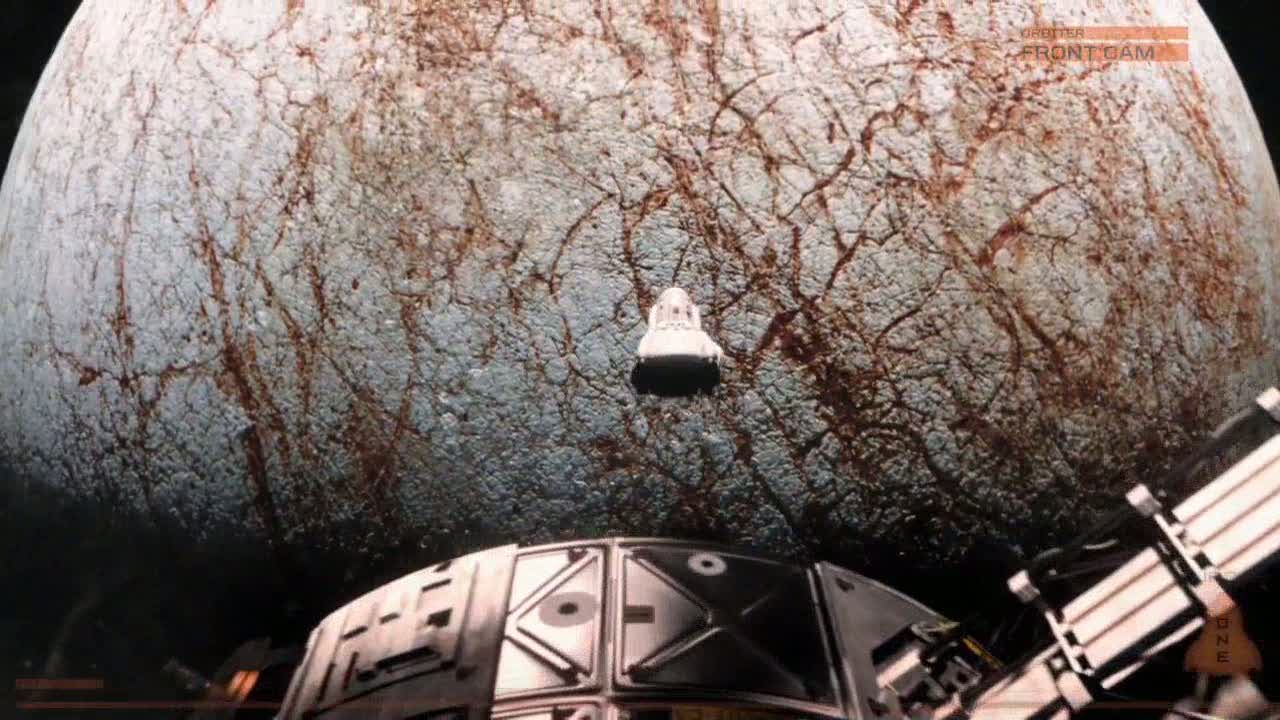
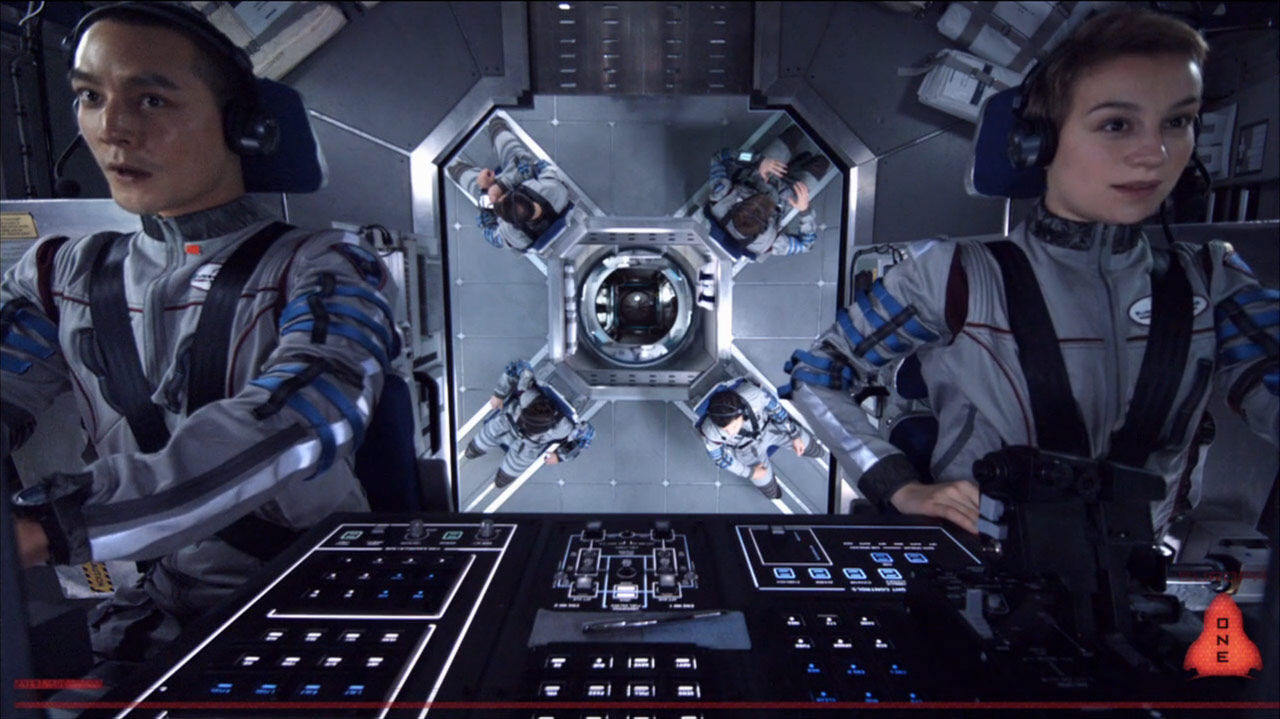
2013 seems to be awash with thought provoking science-fiction films. Not just sanitised superhero flicks but movies that contain sturdy, worthwhile themes. Europa Report can be counted as one of those. Directed by Ecuadorian Sebastian Cordero (Cronicas) this’n slipped under the net somewhat, unknown and unseen by almost every casual cineaste. It is easy to see why. Without a big name director or a star actor’s coattails (highest profile guy is Sharlto Copley of District 9 and Elysium fame) for the PR men to grab onto there seems to have been very little promotion for Europa Report (it relied mostly on viral and blogging publicity campaigns). It’s also very character-driven with no time wasted on superfluous action scenes – and without ‘action’, films rarely sell well.

Right, a synopsis: a crew made up of Americans, Europeans and Russians head to Europa (a moon of Jupiter) the one seemingly inhabitable body in our solar system. They are on a quest to discover whether there is any sentient life thriving in the vast frozen oceans there, but disaster strikes and Europa turns out to be a bit wilder than predicted. I say ‘wilder’ – it’s not like Avatar with rampaging predators – but instinctive life, creatively and interestingly presented by the filmmaker. Without any distracting monster VFX, suspense is sustained at a captivatingly high level right to the end – a feat based on the idea that fear of the nameless or unspecified is more mesmerising and enthralling than a visual threat. That age-old film-writing technique of keeping the unknown unknown is as powerful as it was in the 1940s when Jacques Tourneur made Cat People.

Cordero’s cinematographic approach to his space odyssey-ing sci-fi comes from an unusual angle. The unnerving concept behind found-footage is usually applied to low-budget horror (not that that technique is low budget anymore – just look at the Paranormal Activity franchise)  to instil an immediacy, and cleverly unhook the significance of the ending, i.e. the audience knows whether the characters survive or not because that’s the nature of anonymous ‘found-footage’. Interspersed with the private videos and footage are faux interviews with the ‘experts’ that worked on Mission Control and knew the astronauts who were lost on the exploration, taking on a documentarial role.


With a mixed chronology Europa Report can be considered a challenging watch, and it’s absolutely necessary to stick with the characters, and spend time mentally piecing together the events as they emerge. It sounds like a recipe for madness, for utter cinematic and narrative chaos but a focussed audience is rewarded with an extremely satisfying final third, in which everything unravels from a fragile bud into a sturdy, charismatic flower. Worth a go.