Jim Jarmusch is one of those idiosyncratic filmmakers whom one only discusses in furtive whispers behind bookshelves of Proust, his curious filmography having spread almost by word of mouth. If the shock of platinum hair has always rendered him visually memorable his cinematic studies of curious unorthodox characters has become a filmic trope in American independent circles.
Permanent Vacation was his first full length feature - though even that clocks in at a comparatively lowly 75 minutes. We follow Morrissey-lookalike Ally Parker a daydreaming teenager with a furious wanderlust, both in temporal and spatial terms. Temporal because his music tastes and sartorial look is based on 50s rock'n'roll/teddy boy, slicked back hair; spatial in the sense that he is perennially walking around New York City, but with always with an eye on other places. He's searching for new experiences and locations but never with any intention of settling anywhere, a permanently fleeting spirit with nothing to tie him down. And it's something that he revels in, enjoying the disapproval others have for the manner in which he conducts his life.
Ally explores the broken urban backstreets of America encountering characters stricken by the ruthless pedagogical systems, living amongst the rubble of ruined buildings. But he decides to leave for Paris, though not before meeting an exact French replica of himself going in the other direction: both are enigmatic and laid-back, though seeking a kind of reassurance from the other that their respective cities are worthy of boots-on-the-ground exploration.
 Travel, the wandering nature and resistance to a conventional life - jobs, families et cetera - are modes of living that have always appealed to me; thus I see in Permanent Vacation a beautiful idealism, a search for adventure and uncovering of the unknown that appeals to me personally. Constant itinerancy has a romance.
This debut is more a demonstration of Jarmusch's writing abilities - to capture unusual characters in episodic fashion relinquishing the restricting necessity of a plotline. It's a strange beginning to a career but wholesome and curiously optimistic.
Tilda Swinton won awards for her tortured portrayal of the mother of titular Kevin. Psyched out and raving she is followed by the colour crimson everywhere like the spectre of her past haunted life; Eva (Swinton) lives her life in the shadow of some post-traumatic event that gradually unravels itself in the course of the narrative with a series of flashbacks. She lives in the same town, regularly discriminated by its others inhabitants. They douse her small house and Volvo in red paint; Eva spends the film scraping it off, as a visual act of catharsis. It's blood, it's grief, it's guilt; it's an inversion of the 'anger' that red usually denotes because she is not angry; it's a visual reminder of what terrible events marked Eva's life; and it's not subtle. There is crimson everywhere.

Kevin is involved. He is the ultimate problem child, inhibiting the relationship between mother and son with his facetious behaviour, deliberately and demonstrably altering his demeanour from his mother to his father (John C Reilly). We follow Kevin's development through Eva's flashbacks. The child actor (Jasper Newell) infuses his Kevin with the black beetle eyes of a menacing disposition but its the teenage Kevin, played by the brilliant Ezra Miller, who adds a disturbing charisma and darkly witty humour to the role. Of course the self-destructive origins of their relationship lie not only with Kevin but Eva herself; though she tried initially to forge the necessary connection they faltered repeatedly, because of his obstinacy and her inherent reluctance. Indeed Eva appears to have been reluctant about bearing him in the first place.
But its the recurrence of the crimson that runs right through We Need To Talk About Kevin. The colour flares up in tangible objects, dream sequences, metaphysical visions and within the flashbacks - it reminds her of that moment when she saw the outrageous crimes that Kevin gleefully carried out, and resonates down the two years that have since passed in her life, suffused with every bad experience she subsequently suffers.
But, perversely, by representing the duality of guilt (for the way she raised Kevin) and memory, the crimson performs a kind of redemptive role, contrarily bringing Eva and Kevin closer together. At the end he is suddenly fearing the black abyss of his imprisoned future, she feeling responsible for the torturous violence of his wayward teenage behaviour, and so for the first time they embrace sincerely.
 I haven't read the original novel by Lionel Shriver but I should think Scottish director Lynne Ramsay took the story in her own artistic direction - as filmic adaptations ought to. She unites (because she co-wrote the screenplay) the strands of flashback and the present with inventive cinematography, employing all manner of compelling photographic techniques. By doing so she infuses every scene with a nihilism, questioning the nature of being in the modern world and, possibly, even the unconditional joy ordinarily felt in the bearing and rearing of children. We Need To Talk About Kevin is a movie without humour - even black comedy is non-existent. It's a depressing watch but in an unorthodox manner, incisively conveying its intended tone of rampant pessimism.
One brief wiki research later and I discover McQueen comes from an artistic background. Well quelle fucking surprise as the Peep Show quote goes. Shame is another dose of visual majesty - again with the endearingly appellated Sean Bobbitt as cinematographer: they gorge themselves voraciously on artistic camera effects, lighting and costume to enact another wonderful tale of emotional heartbreak and substance.
We get more flair and more Fassbender, this time trying to hide his own sexual desperation, a man lost in the over-stimulus of New York City. His character, Brandon, is at once charming, charismatic and desperate, depraved. His outside social face is struggling to remain ahead of the filthy darkness that pervades his private life: his safe place, home, where he can indulge in the activities he knows would be considered perverted and unhealthy outside of his mind, is
invaded by his sister Sissy (Carey Mulligan) who brings her own wealth of problems into his life, forcing onto him a responsibility that serves only to worsen their already dysfunctional relationship. Nearly every image is dipped in grey hues, like Brandon himself who regularly wears blandly coloured scarves and coats, as a way of demonstrating people's outward normality belying internal turmoil. His only hope is the brightly dressed woman on the subway, a metaphor of narrative perhaps but nonetheless poetic.
McQueen crafts another picture that is constructed by the metaphorical building blocks and clues he craftily scatters throughout every frame, yet these are organic constructions that don't require inordinate amounts of attention. They are obvious yet subtle enough for us, the audience, to understand the life and inner workings of Brandon without immediate distraction. It's scary because he just an ordinary thirty-something man. Worse even, he is successful and financially secure; it undermines the central component to our capitalist societies, that wealth equates to unconditional happiness.
I don't know how McQueen has acquired such a striking command so early in his filmmaking career, just two films in (Hunger too of course). There aren't many others with the immediate grasp of directorial techniques that he has. His next, 12 Years A Slave, and out soon, looks muy muy promising.
Gus Van Sant is one idiosyncratic gentleman. Overtly artistically and untediously belligerent, he sees and creates stories that juxtapose abrupt violence with oblique emotional warmth and sincere humour. Van Sant, who went to school with David Byrne, is a true renaissance man - he directs, writes, paints, plays music, photographs, winks, twerks and nods according to trusty old wikipedia. In that vein My Own Private Idaho, his third directorial accreditation, is a demonstration of his ability to juggle multiple strands and ideas yet still finish with a coherent final picture.
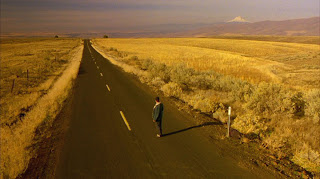 As an independent film My Own Private Idaho could be pretty free with its controversial content, able to say and paint the visual pictures that a mainstream studio film couldn't, yet it struggled to pick up funding for production. The controversy surrounds the rent boy homelessness of narcoleptic Mike (River Phoenix) and Scott (Keanu Reeves). Perhaps controversy arose because of the film's matter-of-fact treatment male prostitution: the reasons for their lowly predicament are not the subject of the film and are left unexamined because this isn't some social analysis of American society but a story about relationships and existentionalism. Their 'profession' is not a central plot feature, just a kind of mental starting point for the story to progress from. Though most sex scenes are implied there are two that appear out of necessity, and they ingeniously portrayed: instead of movement Van Sant appears to draw from his photographic background and puts his copulating characters in significantly sexual still life positions... sure I've seen it somewhere else, but can't remember where.
The writing is fragile and delicate and oscillates wildly between the two central characters; it can be separated into four distinctive acts. One, the lives of the boys specifically Mike and his stressful narcolepsy (often sleeping through difficult or socially awkward scenarios); two, with the arrival of Bob Pigeon (William Richert) as the Falstaff figure My Own Private Idaho transforms into a contemporary homage to Shakespeare's Henry IV: Part One, with Scott (who comes from a rich background) as Prince Hal, the character who indulges in moral depravity but whom plans a spectacular redemption to emphasis his dramatic transformation - it also re-enacts one of the more famous scenes from that play, the robbery - with Scott taking the central lead role; the third act features both Mike and Scott equally as the movie becomes a self-discovery travel drama, an attempt to find Mike's mother a trail that leads them to Italy and back (to Portland); finally, we see Scott's redemption and Mike's further descent into depression and psychosis.
That was a long and perhaps confusing sentence (147 words). Mike ends up in his place of existential wilderness (from which the movie opens up with as well) talking to himself; he has lived and is living a difficult under-privileged life full of knock-downs and bad luck. Upon falling into another narcoleptic stupor he is robbed of his belongings and shoes; but then a figure comes along and picks him up: is it another horny customer in search of purchased debauchery? Or is it Scott retrieving his best friend from the metaphorical ditch?

I - as are many others - am slightly in love with Phoenix. Like other figures who die before their time - Keats, Duncan Edwards - or at the peak of their powers - Cobain, Hendrix, Morrison - there's a romance about the premature death of great individuals. River Phoenix sits alongside those individuals because he was/is a great actor blessed with an extraordinarily nuanced talent - the campsite scene is a fine example of that. He had the delicacy and touch of a master. My Own Private Idaho is arguably his greatest film and so we, the retrospective audience who know how shortly his life would continue, have learnt to appreciate it even more.
My Own Private Idaho is aided by the presence of Phoenix who has left a ghostly cult-like impression on all of the films he worked on in his short-lived career. Nonetheless it remains a genius indie movie full of surreal metaphorical images and Udo Kier in his customary American role as 'strange European'.

 Travel, the wandering nature and resistance to a conventional life - jobs, families et cetera - are modes of living that have always appealed to me; thus I see in Permanent Vacation a beautiful idealism, a search for adventure and uncovering of the unknown that appeals to me personally. Constant itinerancy has a romance.


